A credit institution (CI) under RBI's credit-information framework is a regulated entity whose borrower records must be reported to the credit information companies that cover it. Banks, non-bank finance companies, housing finance providers, cooperative banks and other specified bodies have directions tailored to their institution type. An app brand is not automatically a separate CI: identify the licensed lender named in its loan agreement.
What the July 2026 schedule actually says
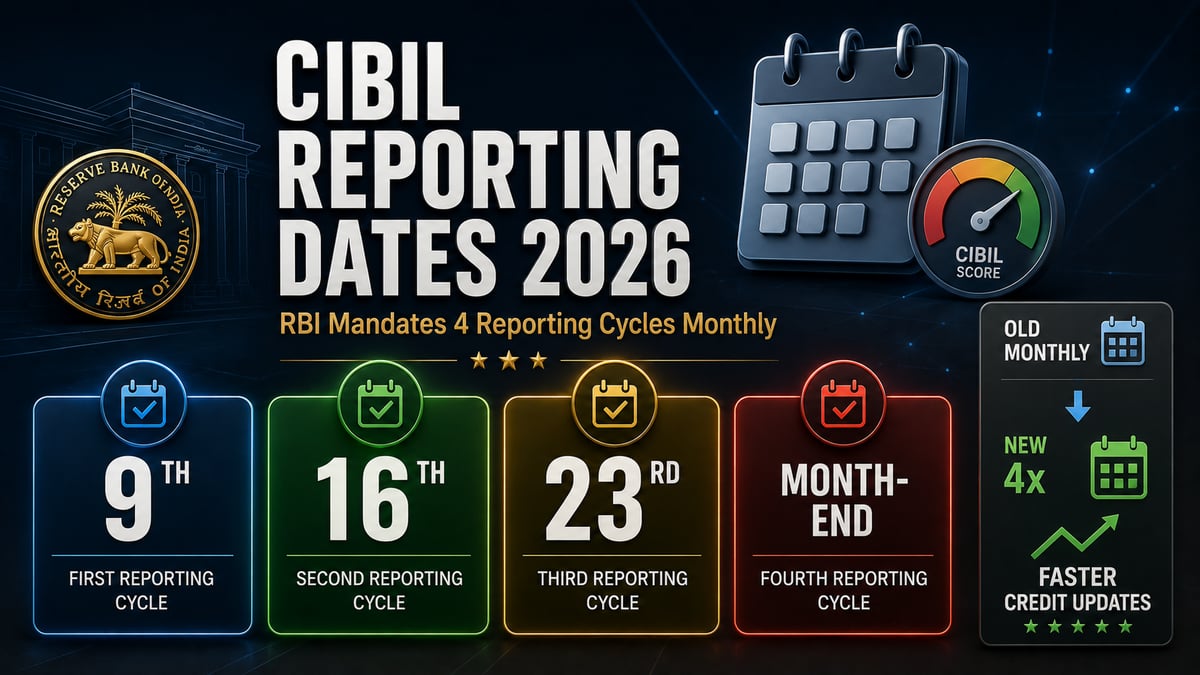
The previous baseline was 15th and month-end reporting under the RBI 2024 circular. From 1 July 2026, covered institutions use the 9th, 16th, 23rd and last day of each month as reference dates under the amendments summarised by Punjab National Bank. Month-end data is a full file; interim submissions focus on new, closed, changed and overdue accounts. Data validation and corrections can affect when a consumer sees a change.
Rohan's digital loan
Rohan borrows ₹5,000 through a mobile app. He should read the agreement for the actual regulated lender, keep the repayment receipt, and check that lender's entry on his credit information report after the applicable update cycle. A small loan can still be reported, but the exact agreement and reporting entity matter more than the app's marketing name.
Do not confuse lender reporting with deposit insurance
DICGC insures eligible deposits with covered banks up to its statutory limit. A non-bank finance company or fintech lending app does not become DICGC-insured merely because it reports loans to a CIC. Reporting cadence is a verifiable chart, while market-share claims require an actual RBI dataset. Consumer access to a free annual credit report is a CIC obligation, not an entitlement delivered separately by every individual lender.