Calculator
No Tax on Tips Calculator
Calculate your tax savings from the OBBBA 'No Tax on Tips' federal deduction.
Try it now
Run your 2026 numbers against the real IRS figures: federal income tax, the new OBBBA deductions for tips and overtime, 401(k) and IRA planning, mortgages, and capital gains, free and without signup.
Estimate 2026 federal income tax with the $16,100/$32,200 standard deductions, model the OBBBA deductions for tips, overtime, seniors, and auto loan interest, and check self-employment tax (15.3%) and capital gains rates.
Calculate your tax savings from the OBBBA 'No Tax on Tips' federal deduction.
Try it nowEstimate your federal income tax savings under the OBBBA overtime deduction.
Try it nowCalculate your additional $6,000 above-the-line senior deduction under the OBBBA.
Try it nowEstimate your deductible auto loan interest for new, US-made passenger vehicles.
Try it nowModel your combined federal income tax savings across all four new OBBBA deductions.
Try it nowDetermine your eligibility for the new 2026 IRS Automatic Exemption from Penalty (AEP) program and estimate waiver savings.
Try it nowCalculate your split-year 2026 vehicle tax deduction (H1 at 72.5¢ vs H2 at 76¢ per mile) under IRS Announcement 2026-11.
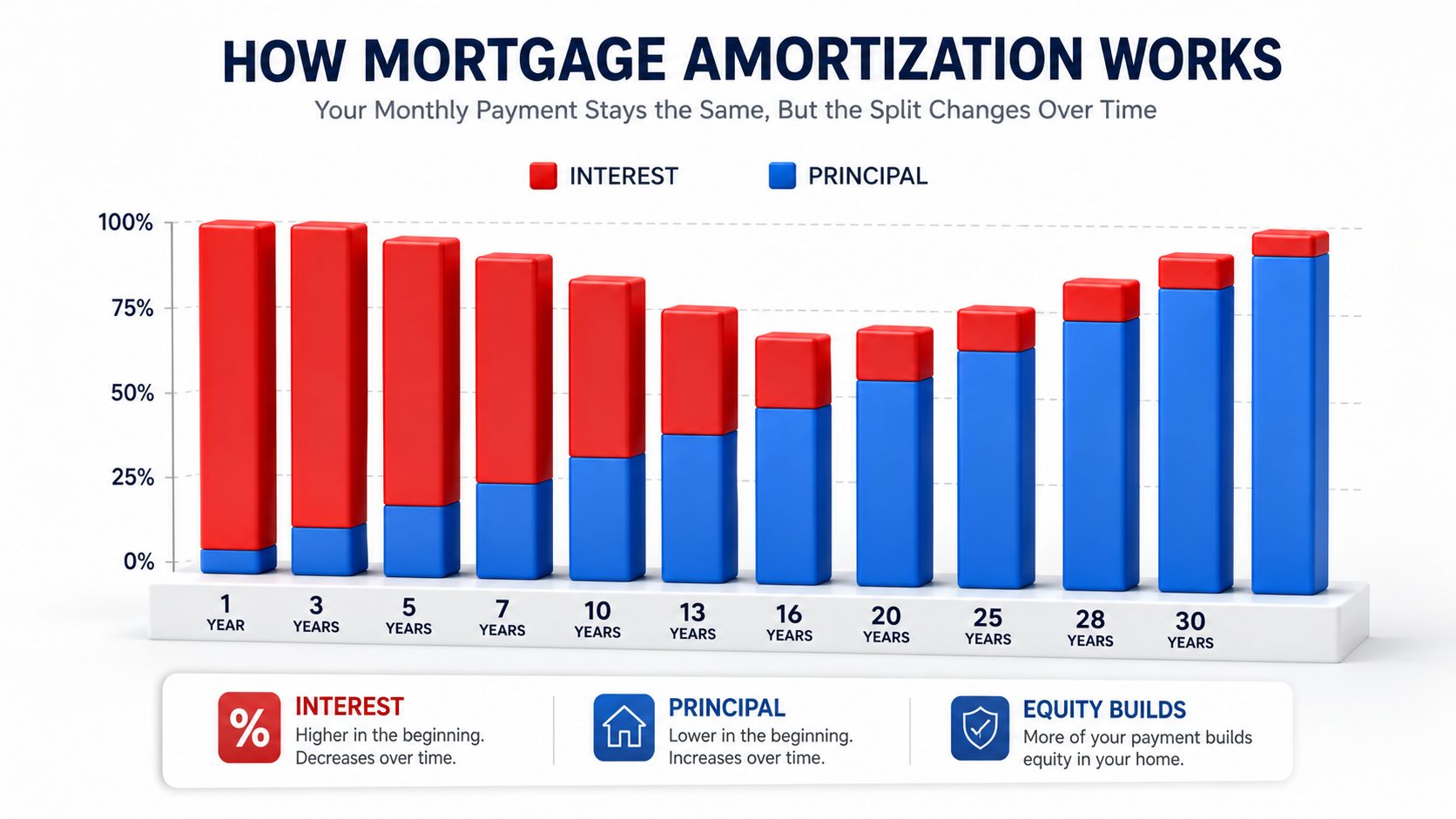
Try it nowCalculate monthly principal and interest on mortgages, personal loans, and auto loans, with front-end and back-end debt-to-income (DTI) checks and full amortization schedules.
Estimate how much the VA can advance to cure your delinquent VA-backed mortgage arrears under the new Partial Claim Program (0% interest, repaid at sale).
Try it nowCalculate your monthly payment shock, new 10% IDR / RAP payments, and PSLF eligibility following the March 2026 SAVE termination.
Try it nowProject long-term compound growth, dividend income, and portfolio returns, including dollar-cost averaging against lump-sum investing.
Plan 2026 contributions against the $24,500 401(k) limit (plus $8,000 catch-up, or $11,250 at ages 60-63) and the $7,500 IRA limit, and compare pre-tax against Roth growth.
Measure how inflation erodes cash, size an emergency fund from your real monthly expenses, and project how long retirement withdrawals last.
Compare investments, retirement accounts, tax regimes, insurance types, and mortgages side-by-side with interactive calculators and real-time projections.
Explore localized financial terms, definitions, and concepts specific to United States. Search and understand key finance vocabulary for better planning.
Every US calculator on this site runs the same math the IRS applies: 2026 brackets and deductions, FICA payroll rates, and the statutory retirement limits.
Taxable income is gross income minus the standard deduction ($16,100 single, $32,200 joint for 2026) or itemized deductions, then run through the progressive brackets from 10% to 37%. Payroll adds FICA: 6.2% Social Security up to the $184,500 wage base and 1.45% Medicare on everything, plus 0.9% Additional Medicare above $200,000. Self-employed workers pay both halves, 15.3% on 92.35% of net earnings, with half of it deductible against income tax.
US mortgages compound monthly: payment = P × r(1+r)^n / ((1+r)^n − 1). Lenders test affordability with two ratios: front-end DTI (housing costs against gross income, typically capped near 28%) and back-end DTI (all debt payments, capped at 36% to 43% for qualified mortgages). Property tax, homeowners insurance, and PMI (required below 20% down) sit on top of principal and interest in the real monthly outlay.
Pre-tax 401(k) and traditional IRA dollars cut today's taxable income but are taxed as ordinary income at withdrawal; Roth dollars are taxed now and grow tax-free. The 2026 limits are $24,500 (401k) and $7,500 (IRA), with catch-ups from age 50. On the taxable side, gains held over a year get the preferential 0%/15%/20% ladder, while anything sold within a year is taxed like wages, often the single most expensive timing mistake retail investors make.