Calculator
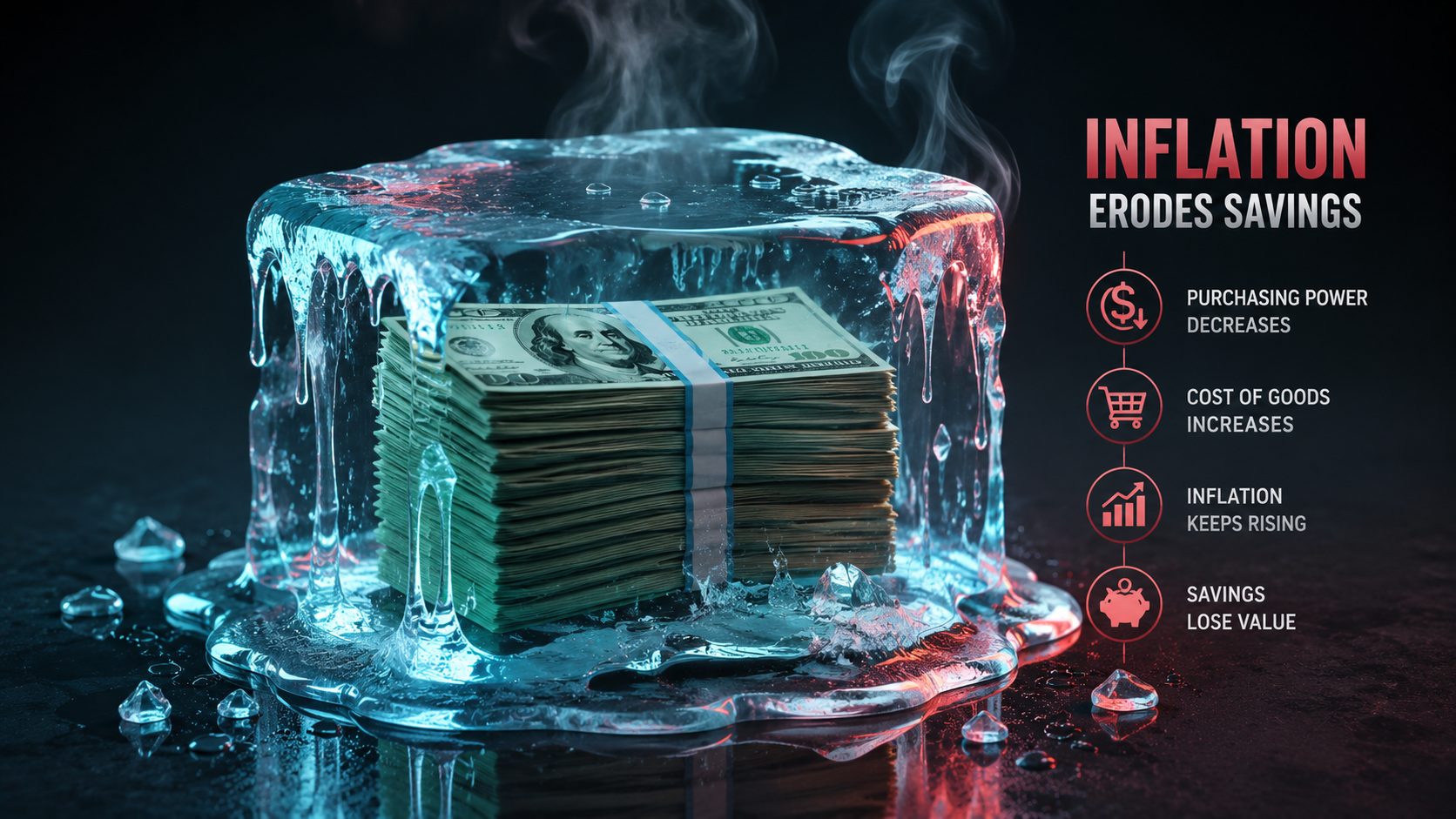
Inflation Impact Calculator
Examine how rising prices erode the future purchasing power of your cash.
Try it nowModel your 360 Savings foregone interest and an illustrative share of the $425 million settlement fund, now delayed by an appeal filed June 18, 2026.
The $425 million Capital One 360 Savings settlement received final court approval on April 20, 2026. Then one objecting class member filed an appeal on June 18, 2026, and every payment froze, potentially for more than a year. While you wait, this estimator models the number the settlement actually pays on: your Individual Recognized Claim, meaning the extra interest your 360 Savings balance would have earned at the 360 Performance Savings APY during the class window. It then shows two illustrative pro-rata scenarios built from the court-appointed Special Master's class-wide damages range. Nobody, including the settlement administrator, can promise your exact check today; this tool shows you the honest arithmetic behind it.
Every class member's share is pro-rata on their Individual Recognized Claim: the approximate additional interest each 360 Savings account would have earned during the class window (September 18, 2019 to June 16, 2025) had it received the 360 Performance Savings APY. Before anything is distributed, the $425 million fund pays attorneys' fees (requested at no greater than 15%, or $63.75 million), roughly $1.8 million in expenses, and $10,000 service awards to each of 26 class representatives. That leaves about $359 million to divide across everyone's recognized claims, and no claim form is needed: payment is automatic to the primary accountholder.
Court filings give you real anchors. At launch in September 2019 the two accounts paid 1.90% and 1.00%, a gap of 0.90 points, per the New York Attorney General's complaint. Through the pandemic plateau the gap narrowed to roughly 0.10 points (0.40% against 0.30%), per the CFPB's complaint. From spring 2022 the Performance account climbed while 360 Savings sat still at 0.30%, and at the widest point the gap hit 4.05 points (4.35% against 0.30%), per the Sim v. Capital One complaint. Blended across the full 69-month window, about 1.9 points is a reasonable starting figure; if you held the account mainly in the later years, push the slider toward 4.
Beyond cash, the settlement forces rate matching: no later than 14 days after the settlement becomes effective, Capital One must pay 360 Savings holders the same APY as 360 Performance Savings, and keep both products available for at least two years. At July 2026 pricing that means 3.00% instead of the legacy 0.30%, which is worth $270 a year on a $10,000 balance for as long as the matching holds. The estimator shows this as a separate yearly figure so you do not mix it up with the one-time cash payment.
Capital One launched 360 Performance Savings on September 18, 2019 while keeping the older 360 Savings product alive and closed to new marketing. Court filings pin the gap at each turn: 1.90% against 1.00% at launch per the New York Attorney General, 0.40% against 0.30% through the pandemic plateau per the CFPB, and 4.35% against 0.30% at the widest point per the Sim complaint.
The lawsuit's core claim was that similarly named accounts led savers to assume they already held the good one. The settlement class is everyone who held 360 Savings at any point in the 69-month window, no matter how small the balance.
Headlines say $425 million; your check comes from what remains after the documented deductions. Attorneys' fees are requested at no greater than 15% ($63.75 million), expenses run about $1.8 million, and 26 class representatives get $10,000 each. That nets to roughly $359 million.
Divide that net fund by the Special Master's damages range and you get the honest per-dollar bracket: around 33 cents per claim dollar if class-wide claims total $1.098 billion, around 48 cents if they total $742 million.
Run the worked example through the whole pipe and the shape is clear: a five-figure balance held for the full window produces a four-figure claim and a three-to-four-figure check.
Scale is linear. Hold twice the balance for the same period and every bar doubles. Hold the same balance for half the window and every bar halves. That linearity is also your sanity check against anyone promising you a precise payout.
The Final Order and Judgment landed April 20, 2026. One objector appealed on June 18, 2026, and the settlement site now says payments will be substantially delayed, potentially over a year. Nothing you file speeds that up, and no claim form exists to miss: payment is automatic to the primary accountholder.
Two practical moves remain. Keep your mailing address current with the administrator so a check can find you, and if you still hold a 360 Savings account, watch for the rate matching that must begin within 14 days of the settlement becoming effective. Anyone calling to 'help you claim your Capital One money' for a fee is running a scam on a settlement that has no claims process.
The settlement pays pro-rata on each member's Individual Recognized Claim: the extra interest a 360 Savings account would have earned had it received the 360 Performance Savings APY. The first half of the formula rebuilds that claim from your average balance B, your average APY gap g, and your months in the class window m.
The second half turns the claim into an illustrative check. The net fund F is the $425 million minus documented deductions (up to $63.75 million in requested fees, about $1.8 million in expenses, $260,000 in service awards), and D is the class-wide damages total. Since D is not final, the estimator runs the Special Master's two endpoints, $742 million and $1.098 billion, to bracket the answer.
Derek kept about $40,000 in a 360 Savings account for the entire 69-month class window, never realizing the newer 360 Performance Savings account paid multiples of his APY for most of that time.
At the blended 1.9-point gap, his recognized claim is $40,000 x 0.019 x (69/12), which comes to $4,370 of interest he would have earned at the Performance APY but did not.
The pro-rata scenarios bracket his check: if class-wide claims total $1.098 billion, his $4,370 claim pays about $1,430; if they total $742 million, about $2,115. His real check lands wherever the final numbers do, which is exactly why the settlement site refuses to promise amounts.
Because Derek still holds the account, the rate matching is worth another $1,080 a year at July 2026 pricing (2.70 points on $40,000), starting within 14 days of the settlement becoming effective. For him, the delayed check is only half the deal.
Review the glossary of terms used in the calculation model below. Click on highlighted links to read more in-depth definitions in our financial glossary:
| Parameter | Definition & Context |
|---|---|
| Average 360 Savings Balance ($) | Your typical balance during the class window. The administrator will use Capital One's actual daily records; an honest average gets you close. |
| Months Held Within Sep 2019 to Jun 2025 | How many of the 69 class-window months your account existed. Opened or closed mid-window? Count only the months inside it. |
| Average APY Gap vs 360 Performance (%) | The average difference between what 360 Performance Savings paid and what your 360 Savings paid, in percentage points. Court filings anchor it between 0.10 and 4.05 depending on the period. |
| Do You Still Hold the 360 Savings Account? | Current holders also get the forced rate matching going forward. Closed accounts still get the cash payment but not the future interest. |
The rules and figures on this page are researched from official primary sources: