Calculator
LRS TCS Calculator (Budget 2026)
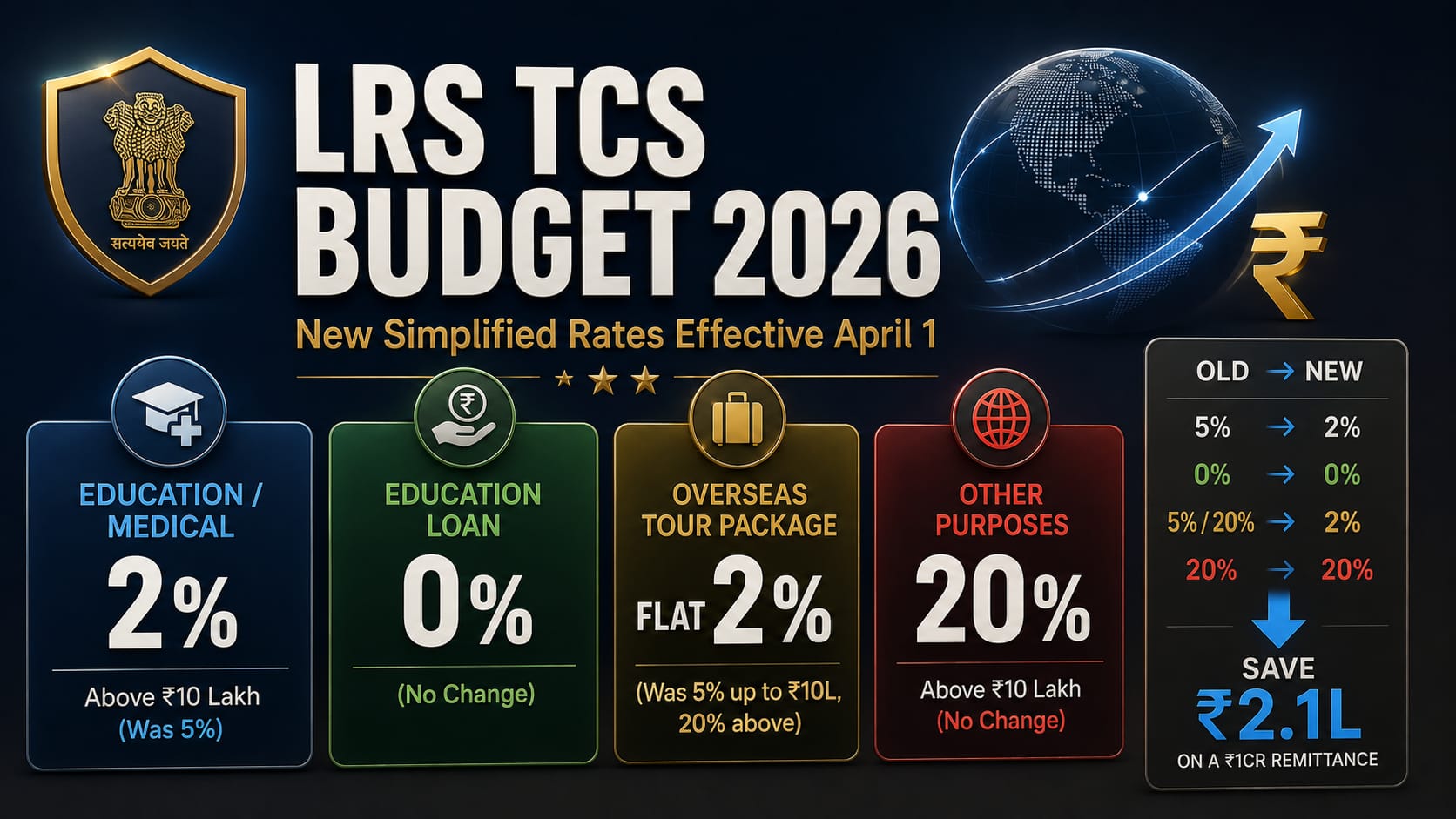
Calculate TCS on foreign remittances under India's Liberalised Remittance Scheme. Budget 2026 reduced education/medical TCS to 2% and simplified tour packages to flat 2%.
Try it now
Old vs new regime, HRA under the expanded 8-city metro list, home loan EMIs, NPS, UPS pension, and LRS TCS, all running on FY 2026-27 figures.
Compare old and new regime liabilities for FY 2026-27, calculate HRA exemption with the expanded 8-city 50% metro list, and model TCS on foreign remittances.
Calculate TCS on foreign remittances under India's Liberalised Remittance Scheme. Budget 2026 reduced education/medical TCS to 2% and simplified tour packages to flat 2%.
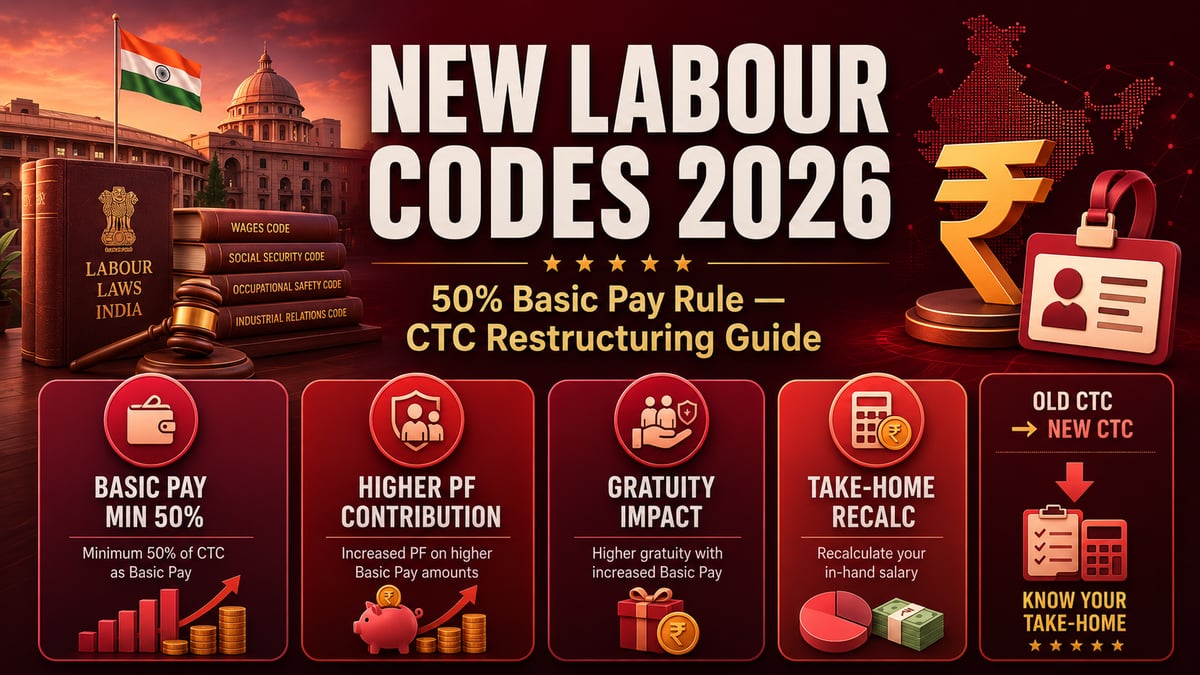
Try it nowRestructure your cost-to-company (CTC) package under India's new 50% basic wage rule and see the impact on net take-home pay, PF, and gratuity.
Try it nowCalculate your HRA tax exemption under the 8-city expanded rule (adding Bengaluru, Pune, Hyderabad, Ahmedabad) for FY 2026-27.
Try it nowCalculate home loan EMIs, total interest, and prepayment savings using standard reducing-balance math.
Estimate UPS assured pension amounts and model NPS and EPF accumulation to retirement.
Compare investments, retirement accounts, tax regimes, insurance types, and mortgages side-by-side with interactive calculators and real-time projections.
Explore localized financial terms, definitions, and concepts specific to India. Search and understand key finance vocabulary for better planning.
CBDT rules under the Income Tax Act set the baseline: default new-regime slabs, old-regime deductions, HRA limits, and reducing-balance loan math.
The new regime applies progressive slabs from ₹4 lakh (nil) through 5%, 10%, 15%, 20%, and 25% bands to 30% above ₹24 lakh, minus a ₹75,000 standard deduction, with the 87A rebate wiping tax below ₹12 lakh. The old regime starts taxing at ₹2.5 lakh but subtracts Chapter VI-A deductions first: 80C investments, 80D health premiums, HRA, and home loan interest. A 4% health and education cess applies to the final tax under both.
The three-limit minimum (actual HRA, 50%/40% of basic, rent minus 10% of basic) means the binding constraint changes with your rent level: at low rent the third limb usually binds, at high rent the city percentage does. The 8-city expansion moves Bengaluru, Hyderabad, Pune, and Ahmedabad tenants from the 40% to the 50% limb: for many, tens of thousands of rupees of extra exemption per year.
Home loan EMIs use reducing-balance math: EMI = P × r(1+r)^n / ((1+r)^n − 1), where early payments are mostly interest, the reason prepayments in the first years save the most. On the retirement side, UPS guarantees 50% of final-year average basic after 25 years of service (with a ₹10,000 monthly floor), while NPS and EPF compound contributions at market and declared rates respectively; the calculators project each under its own rules.