Calculator
Box 3 Wealth Tax Calculator
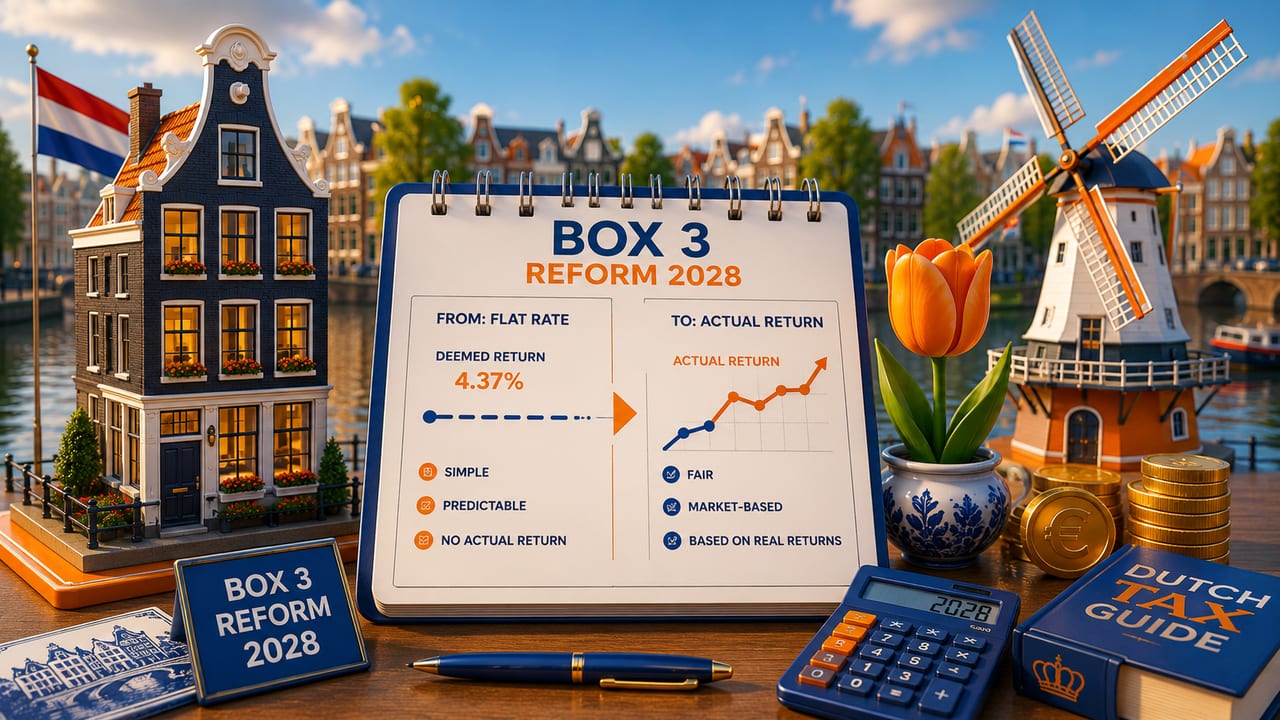
Calculate your Dutch Box 3 wealth tax for 2026 under the current transitional system and compare it to the proposed 2028 actual return system.
Try it now
Box 1 income tax across three brackets, Box 3 wealth tax under the deemed-return regime, ZZP deductions, and the 30% ruling, computed on belastingjaar 2026 parameters.
Estimate 2026 Box 1 tax across the 35.75%/37.56%/49.5% brackets with tax credits, Box 3 deemed-return wealth tax, ZZP deductions, and the 30% ruling.
Calculate your Dutch Box 3 wealth tax for 2026 under the current transitional system and compare it to the proposed 2028 actual return system.
Try it nowCalculate your net profit, entrepreneurial tax deductions (Zelfstandigenaftrek, Startersaftrek, MKB), Box 1 income tax, and ZVW contributions in the Netherlands.
Try it nowCompare investments, retirement accounts, tax regimes, insurance types, and mortgages side-by-side with interactive calculators and real-time projections.
Explore localized financial terms, definitions, and concepts specific to Netherlands. Search and understand key finance vocabulary for better planning.
Belastingdienst rules decide everything on this page: three Box 1 brackets with phasing credits, the deemed-return Box 3 regime, and the ZZP deduction stack.
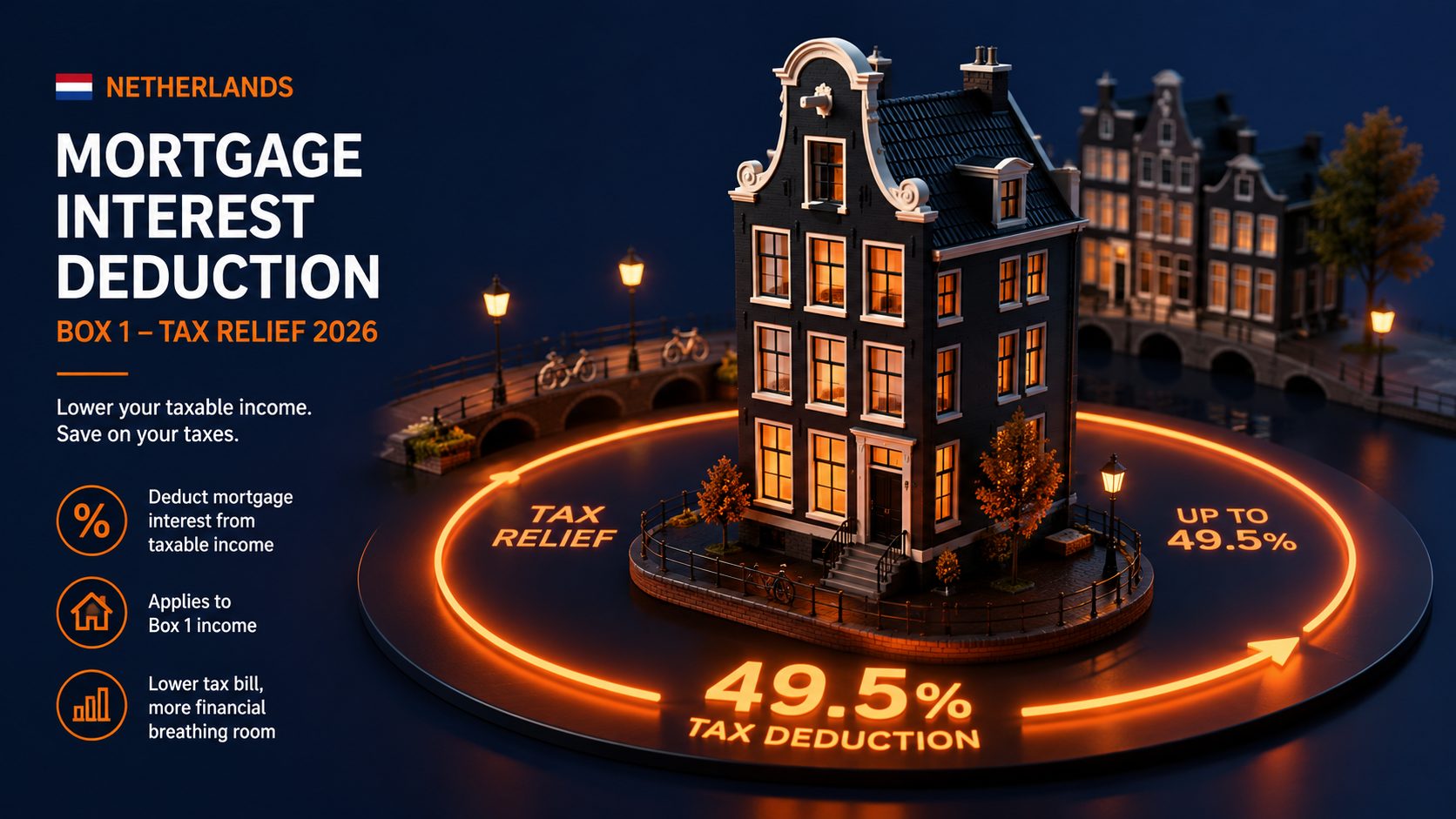
Employment and home-ownership income runs through 35.75% (to €38,883), 37.56% (to €78,426), and 49.5%. The general and labour tax credits are subtracted from the tax itself, not income, and both taper away as income rises, so the true marginal rate between roughly €29,000 and €78,000 sits several points above the bracket rate. The calculators report the effective rate so the taper is visible instead of surprising.
Net assets above €59,357 per person are split into savings and investments, assigned deemed yields (1.03% and 6.00% for 2026, with debts offsetting at 2.46%), and the resulting fictional income is taxed at 36%. Savers barely feel it; investors holding cash-heavy portfolios often pay tax on returns they never earned, exactly the case where filing under the tegenbewijsregeling with actual returns saves real money.
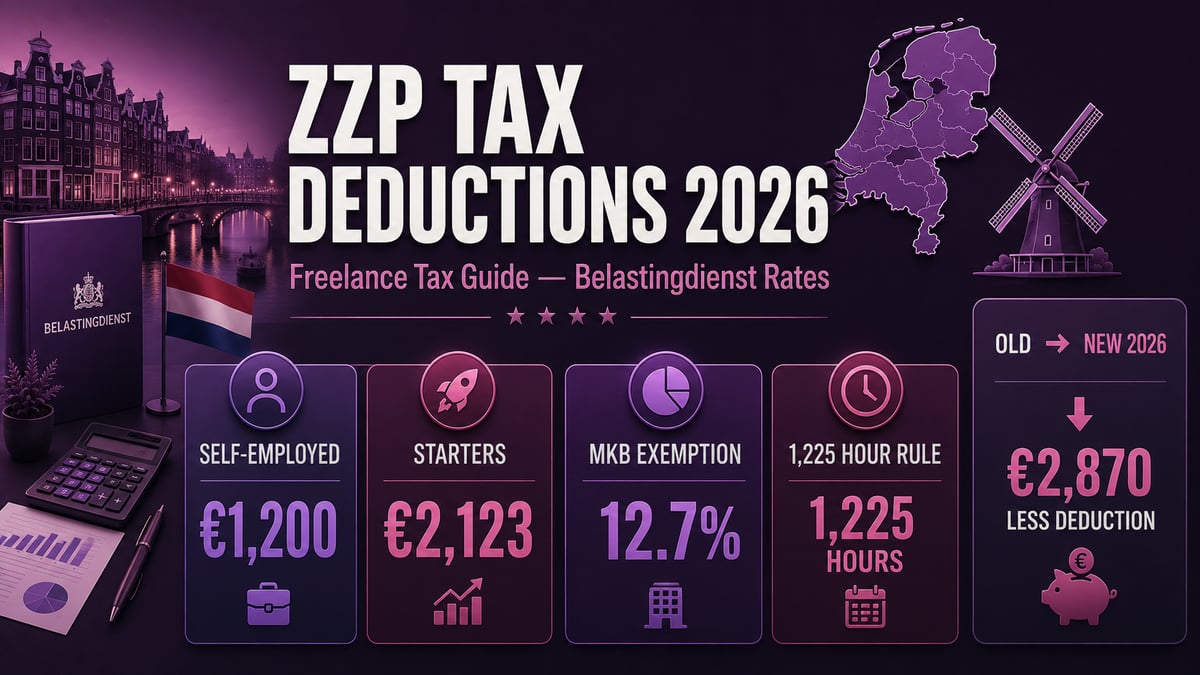
The freelancer stack applies in order: zelfstandigenaftrek (€1,200), startersaftrek (€2,123 where eligible), then the 12.7% MKB exemption on what remains, followed by the income-dependent ZVW health contribution of 4.85% up to €79,409. For expat employees, the 30% ruling instead removes 30% of salary from tax above the €48,013 threshold, stepping to 27% for post-2026 arrivals. Both regimes are modelled with their 2026 parameters in the respective calculators.