A Credit Information Company (CIC) receives borrower records from member credit institutions and prepares credit information reports. India's four major RBI-licensed CICs include TransUnion CIBIL, Experian, Equifax and CRIF High Mark. A lender's reporting, a bureau's acceptance and a consumer's visible report update are separate steps; no universal 7–10-day visibility promise follows from the reference-date calendar.
What changed in July 2026
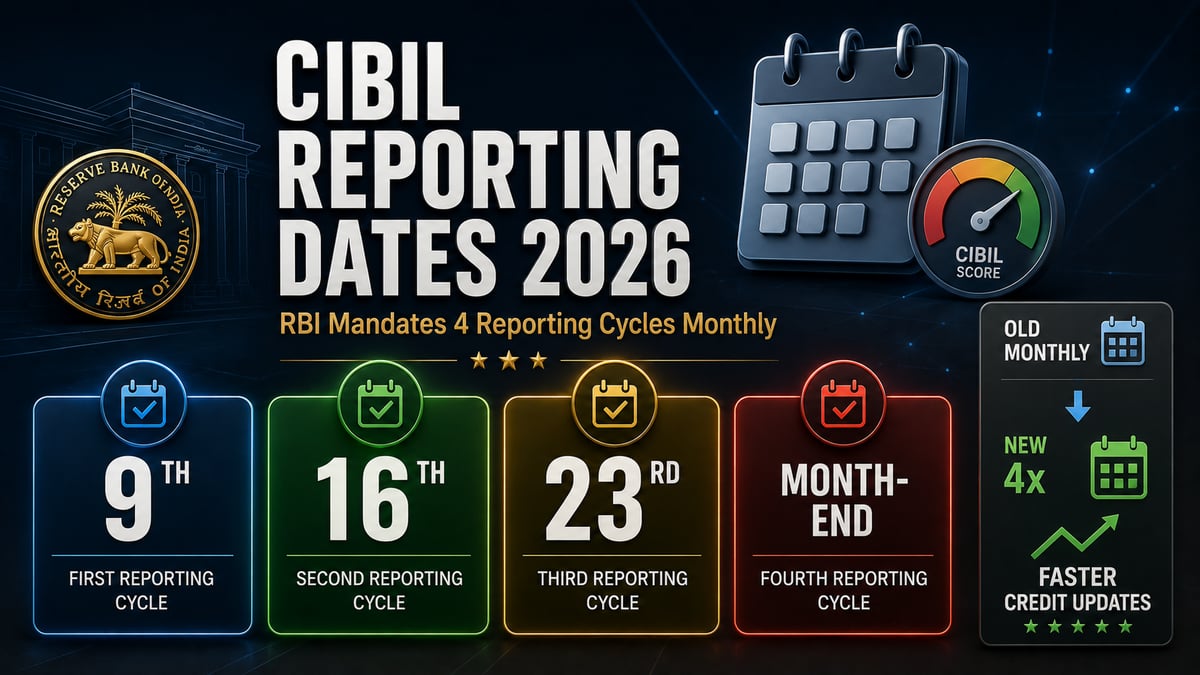
The RBI's 2024 rule required fortnightly reference dates, the 15th and last day of the month—not merely monthly reporting. The later amendment, effective 1 July 2026, added 9th, 16th, 23rd and month-end reference dates. Month-end requires a full file; interim dates use incremental changed/new/closed/overdue accounts. See the RBI fortnightly direction and the Punjab National Bank summary of the December 2025 amendment.
A payment on the 10th
If Ravi pays an EMI on the 10th, the next reference date is the 16th. His lender must prepare and submit the appropriate update; the CIC must ingest and validate it. The report may not show the payment on the 16th itself. If the bank sends rejected data or the account does not meet incremental criteria, timing can differ. Check each CIC report and raise a dispute if the reported balance or delinquency is wrong.
Why a score is not a clock
CICs use scoring models and the complete credit file. A paid EMI can improve the data, but it does not guarantee an immediate score increase of a fixed number of points. A missed payment can damage creditworthiness, yet its impact depends on history, utilisation and other factors. A two-versus-four monthly reference-date chart matches the regulatory schedule.