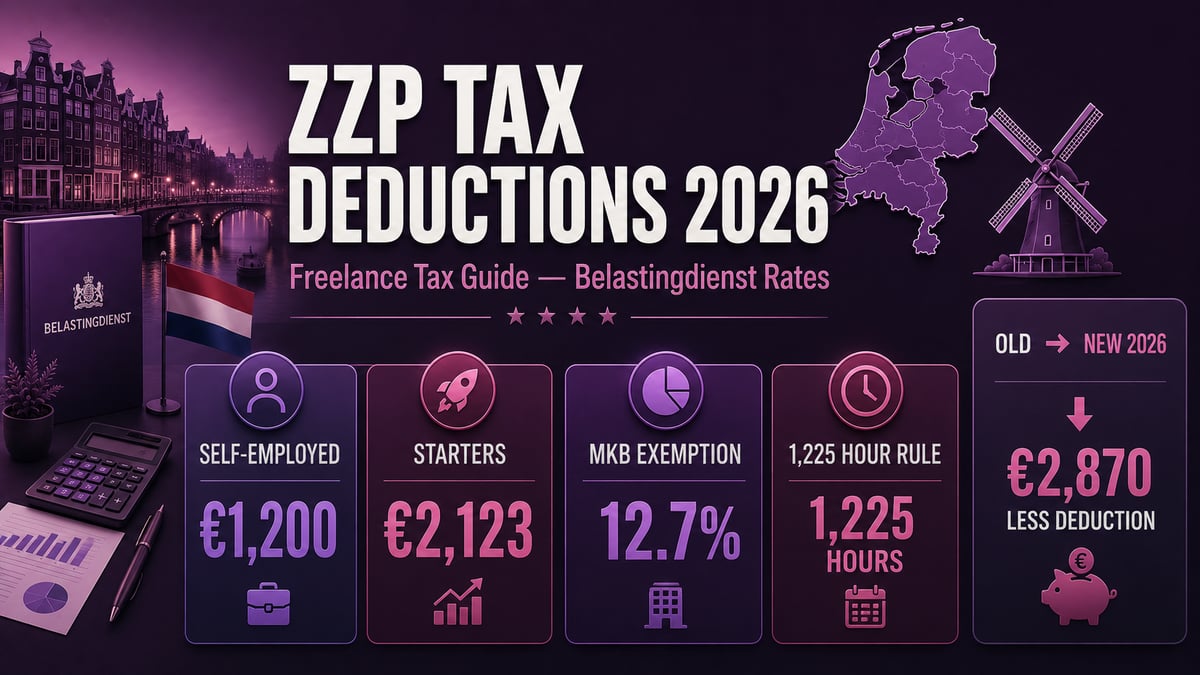
€1,200 is the 2026 zelfstandigenaftrek for a qualifying Dutch income-tax entrepreneur below AOW age at the start of the year. The enacted phase-down shown by Rijksoverheid reaches €900 in 2027. A separate 2027 budget proposes to phase out the extra startersaftrek by 2028; do not confuse that proposal with the regular zelfstandigenaftrek.
A real qualifying test
The taxpayer must be an entrepreneur for Dutch income tax and satisfy the normal 1,225-hour criterion, including the “more business than other work” test unless an exception applies. A freelancer invoice is not itself proof of income-tax entrepreneur status. The Belastingdienst 2026 page states the deduction and other constraints.
Joris's €50,000 profit illustration
If Joris qualifies and has €50,000 profit before entrepreneur deductions, the €1,200 zelfstandigenaftrek reduces profit to €48,800 before calculating MKB-winstvrijstelling and other items. At a marginal tax effect of 37.56%, the maximum simple standalone effect of that €1,200 is €450.72. Because the MKB exemption is applied after entrepreneur deductions and a tax-benefit rate cap applies, the real incremental tax effect must be calculated on the full return; do not promise €450 to everyone.
The phase-down is not abolition
Published amounts were €7,030 in 2020, €6,310 in 2022, €3,750 in 2024, €2,470 in 2025, €1,200 in 2026 and €900 in 2027. Future amounts may be changed by legislation. Ondernemersplein says the planned reduction ends at €900 in 2027 in the existing schedule; a proposed 2028 zero for another deduction is not evidence this one disappears.