Germany Aktivrente Pensioner Tax Savings Calculator 2026

Calculate your German income tax savings under the 2026 Aktivrente. Model the €2,000/month tax-free allowance for working seniors.

Adjust Simulator Inputs

EUR
EUR

Guide & How-To

Determine your German income tax savings under the 2026 Aktivrente (Active Pension) reform, which allows working pensioners to earn up to €2,000/month tax-free.

What is Germany's Aktivrente (Active Pension)?

Introduced on January 1, 2026, as part of the Rentenpaket II pension reform package, the Aktivrente is a tax incentive aimed at keeping skilled workers in the labor market. Working pensioners who have reached the statutory retirement age (Regelaltersgrenze) can earn up to €2,000 per month (€24,000 per year) completely free of income tax. This tax-free allowance applies automatically via payroll, meaning no application is required.

Exclusions and social security contributions

Note that the Aktivrente is a tax exemption, not a social security exemption. Working pensioners remain liable for employee social security contributions (health, nursing care, and pension insurance, totaling roughly 20.3% in 2026) on their active earnings. Furthermore, the Aktivrente exemption is only available to social security-contributing employees; freelancers, self-employed individuals, civil servants, and marginal employment (Minijobs) are excluded.

Telling payroll, and checking the first payslip

The exemption is applied through the wage-tax system, which means your employer's payroll has to know you qualify: that you draw a statutory old-age pension and have passed the statutory retirement age. In the first months of 2026 plenty of payroll systems applied old tables by default, so the single most useful action for a working pensioner is reading the first post-January payslip line by line, gross wage, Lohnsteuer (should be zero or near zero up to €2,000), and the social contributions that legitimately remain. If income tax is still being withheld on exempt wages, the money is not lost, it reconciles through the annual tax return, but that is an interest-free loan to the Finanzamt you did not need to make. Pensioners with two part-time jobs should also know the €2,000 monthly cap is per person, not per employer, so the combined wages share one allowance and the tax office will reconcile any doubling-up at assessment.

What the numbers actually mean for you

Why the saving is bigger than it looks

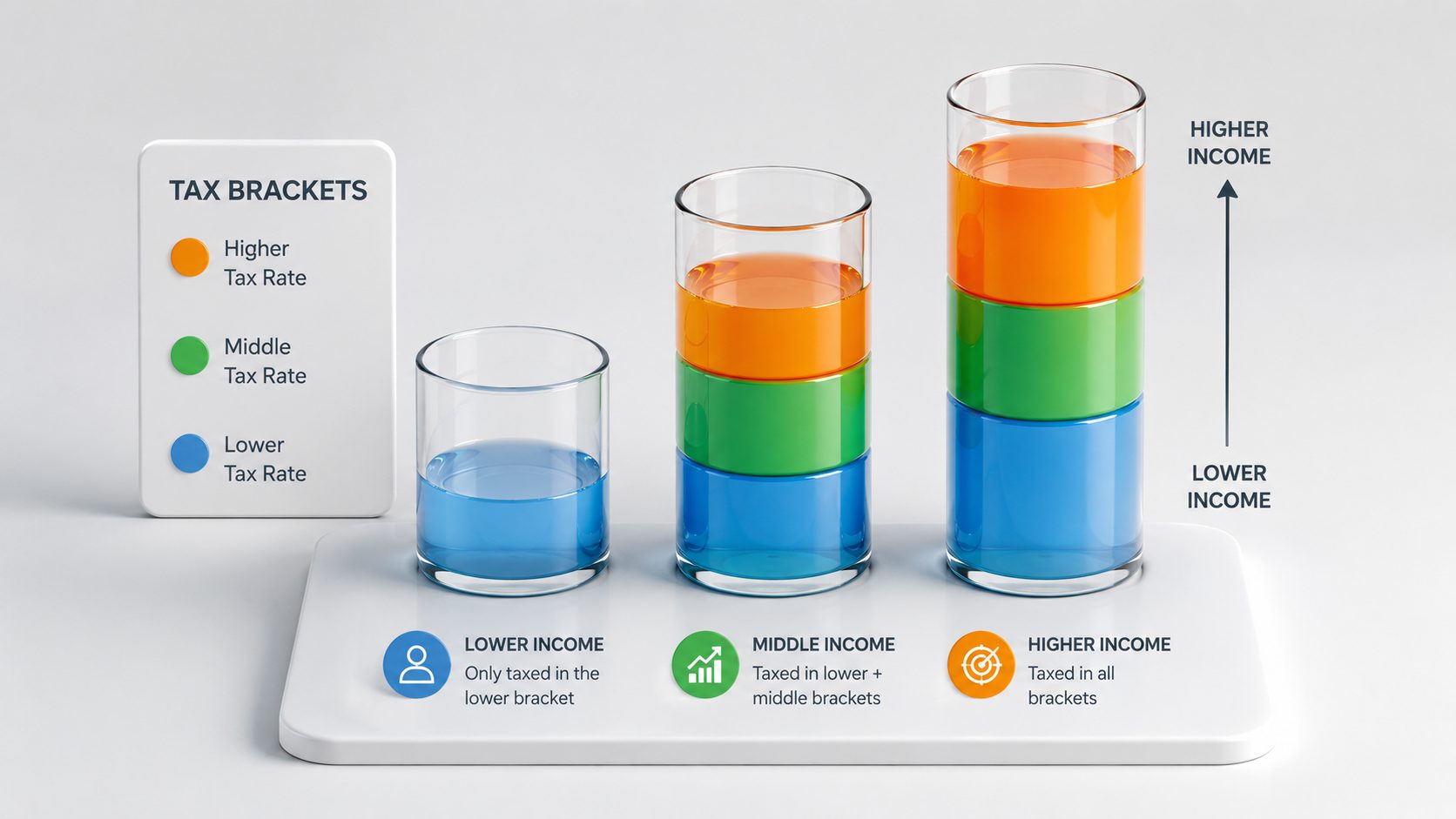
The exempted wages come off the TOP of your income, where the progressive formula bites hardest. Helga's pension alone sits in a modest bracket, but her wages stacked on top were being taxed at roughly 24-30 cents per euro; exempting them saves at exactly those top rates. The same €18,000 of wages saves more tax for a pensioner with a €30,000 pension than one with an €18,000 pension, which the calculator makes visible when you move the pension slider.

There is a second-order effect the headline misses: without the exemption, work earnings also drag the PENSION into higher progression. Removing them from the tax base lowers the rate applied to pension income too, part of Helga's €4,320 comes from her pension being taxed more gently, not just from the wages going untaxed.

The boundaries: who and what the €2,000 does not cover

Three gates decide eligibility. You must have reached the STATUTORY retirement age, early retirees drawing a reduced pension before that age do not qualify until they cross it. The income must come from active EMPLOYMENT subject to social insurance, self-employed side income and mini-job constructions follow their own rules. And the exemption covers income tax only: pension, health, and long-term-care contributions still come out of the wages, which is the gap between 'tax-free' and 'deduction-free' the headlines blur.

Above €2,000 a month nothing bad happens, the excess is simply ordinary taxable income. A pensioner earning €2,500 keeps the full exemption on the first €2,000 and pays normal tax on €500, so there is no cliff to manage and no reason to artificially cap hours at the threshold.

Using it well: hours, brackets, and the employer conversation

The policy exists because Germany is short of workers and long on healthy 67-year-olds, and the deal is genuinely good: at €2,000 a month exempt, a working pensioner in the 30% zone keeps roughly €7,200 a year that the old rules would have taxed away. For anyone already planning to work in retirement, the only action items are telling payroll to apply the exemption and checking the first payslip actually reflects it.

For those deciding WHETHER to work, run the calculator with honest numbers rather than the headline: the net hourly value of retirement work is wages minus social insurance, with no income tax up to the cap. That usually beats the pre-2026 arrangement by enough to change the decision, but it is not the gross wage, and a job whose value depends on ignoring €350 a month of contributions deserves the honest arithmetic first.

One professional note: the exemption interacts with pension deferral. Working past retirement age WITHOUT drawing the pension earns deferral bonuses of 0.5% per month; working WHILE drawing it earns the Aktivrente exemption instead. High earners close to retirement age should price both paths, they are alternatives, and which wins depends on pension size, expected longevity, and how much you enjoy the job. The calculator prices the Aktivrente side of that comparison with your real numbers.

How the Aktivrente math works

Germany's Aktivrente lets pensioners who keep working past the statutory retirement age earn up to €2,000 a month (€24,000 a year) from active employment INCOME-TAX-FREE from 1 January 2026, on top of their normal pension. It is an exemption for wages earned in retirement, not a savings product, and nothing needs to be contributed to get it.

The calculator runs your combined income through the real German tax formula twice: once with all work earnings taxable (the old world) and once with the first €24,000 exempt (the Aktivrente world). The difference is your annual saving, and because German rates are progressive, the saving depends on your pension size, not just your wage.

Calculation Steps:

  1. Enter your annual gross pension, your monthly earnings from active employment, and whether you pay church tax.
  2. Work earnings up to €24,000 a year are exempted; anything above stays taxable on top of your pension.
  3. Income tax (plus Soli and Kirchensteuer where they apply) is computed on pension plus ALL earnings, then on pension plus only the taxable excess.
  4. The gap between the two bills is the Aktivrente saving. Social insurance is shown separately because the exemption does NOT cover it: pension and health/care contributions still apply to the wages.

Worked example

Helga, 67, draws a €24,000 annual pension and keeps working three days a week at the pharmacy for €1,500 a month, €18,000 a year.

Without Aktivrente, her €42,000 combined income owes about €6,356 of income tax.

With Aktivrente, all €18,000 of wages fit inside the €24,000 exemption; only the pension is taxed: €2,036.

Saving: €4,320 a year, effectively a 24% pay rise on her pharmacy wages for filling in one extra line with the payroll office.

Social insurance still takes its share of the wages (roughly €3,654 employee contributions on €18,000), which is why her net gain is large but not the full gross wage.

Input definitions

Review the glossary of terms used in the calculation model below. Click on highlighted links to read more in-depth definitions in our financial glossary:

ParameterDefinition & Context
Annual Pension IncomeYour gross statutory (and company) pension. It stays taxable as before; its size sets the marginal rate the exemption saves at.
Monthly Active EarningsGross wages from employment after reaching statutory retirement age. The exemption covers the first €2,000 per month.
Church TaxKirchensteuer (8-9% of income tax) rides on the tax bill, so the exemption also shrinks it for members.
Built & MaintainedBuilt by Galvin Mendonca, Finance Researcher
All figures from primary government sources. Last updated July 2026.

Frequently Asked Questions

You Might Also Like

View All

Sources & references

The rules and figures on this page are researched from official primary sources:

Disclaimer: All calculations are estimates based on current statutory data and user inputs. Tax rates, retirement regulations, contribution limits, deduction thresholds, and investment fees change over time and vary by jurisdiction. This calculator does not constitute financial, investment, tax, or legal advice. Always verify critical values with an official professional advisor or reference the official government publications cited above before making any financial decisions.