The age line is 65, and the clock starts in April 2027
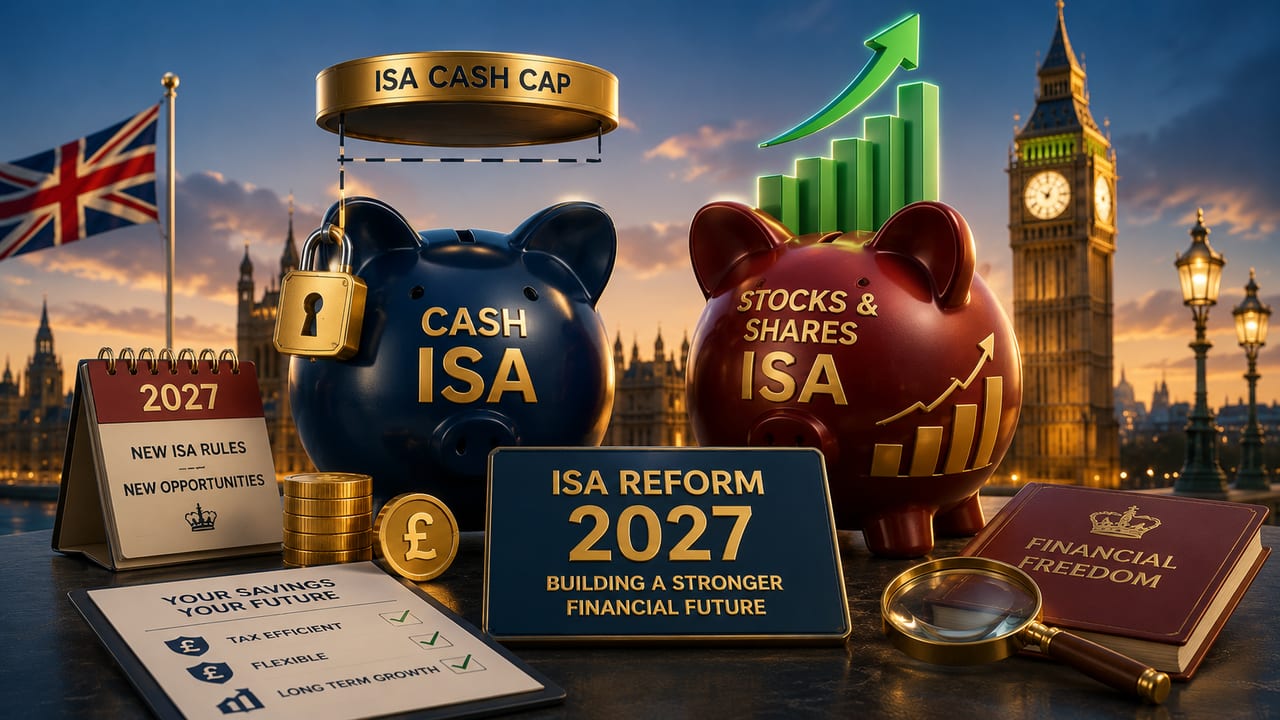
From 6 April 2027, the UK Cash ISA subscription limit will be £12,000 for a saver who is 64 or under at the end of that tax year. A saver who turns 65 during the tax year keeps access to the full £20,000 Cash ISA limit from the start of that year. The overall adult ISA subscription limit remains £20,000. These are annual limits on new subscriptions, with no separate £1,000 monthly cap.
This is enacted future law as of September 2026. The Individual Savings Account (Amendment) (No. 2) Regulations 2026 were made on 10 September, laid before the Commons on 14 September and come into force on 6 April 2027. HMRC's 17 September policy paper still uses a heading that says "Proposed revisions", but the made statutory instrument is the tiebreaker on legal status. Its operative date is in the future, so today's ISA subscriptions remain governed by current rules.
The regulations also impose a charge on interest or alternative finance return paid on cash held in a Stocks and Shares or Innovative Finance ISA. They set the charge at the savings basic rate in force for the tax year. Finance Act 2026 section 5 fixes that rate at 22% for 2027-28. The charge is on interest, not on the uninvested cash principal. It is distinct from ordinary income tax on interest earned outside an ISA.
How much cash ISA room do you have?
Sarah turns 64 in November 2027 and expects to put £20,000 into ISAs during the 2027-28 tax year. Her Cash ISA subscriptions can total £12,000 across providers. She could place the remaining £8,000 of her overall ISA allowance into a non-cash ISA if those investments suit her, or she could simply leave that part of the allowance unused. Nothing in the rule obliges her to buy shares. If she keeps additional money in an ordinary savings account, any taxable interest depends on her income, Personal Savings Allowance and the account's rate.
Peter turns 65 in November 2027. Regulation 6 tests whether he is 64 or under at the end of the tax year, and HMRC's savings newsletter says the higher limit applies from the start of the tax year in which a person turns 65. Peter can therefore subscribe up to £20,000 to a Cash ISA in 2027-28, provided he has not used that overall allowance elsewhere. The old shorthand "66 and over" is a year too late.
Annual ISA subscription room from 6 April 2027
The £12,000 figure is annual, so £1,000 a month is only one way to plan it. A single £12,000 deposit would also use the Cash ISA allowance, subject to the provider's account terms. Money already held in an ISA before April 2027 is not a new subscription merely because it remains in the account; the new cap concerns subscriptions in the applicable tax year. Check any transfer rules separately before moving an existing balance.
What the 22% charge covers
Suppose Sarah has £1,000 of uninvested cash in her Stocks and Shares ISA and the platform pays £50 of interest on that cash in 2027-28. The regulations' flat-rate charge at the 22% savings basic rate would amount to £11 on the interest, not £220 on the £1,000 balance. If the platform pays no interest on its cash balance, there is no cash-interest amount on which to apply that charge. This example does not forecast any platform's interest rate.
2027-28 charge on interest paid on cash in a non-cash ISA
The ISA manager must account for the charge under the new rules. The regulation also treats the charged interest differently from ordinary taxable savings income. A person should not assume that their Personal Savings Allowance will refund this charge. HMRC's reform factsheet says the Personal Savings Allowance does not apply to growth or interest paid in an ISA.
The made rules restrict transfers from non-cash ISAs into Cash ISAs for account holders below the age threshold, while Cash ISA to non-cash ISA transfers remain possible under the amended transfer rule. They also prevent the investments in a Stocks and Shares ISA, excluding cash, from being 100% money market funds. Partial money market fund holdings can remain qualifying. These are account-operation rules, not a requirement to take more market risk than you can afford. Check the latest provider guidance before transferring or changing investments.
Taxable cash and long-run projections
Someone who uses £12,000 of Cash ISA room and keeps another £8,000 in a taxable savings account may owe income tax on some interest. The result depends on the starting rate for savings, Personal Savings Allowance, other income, and the rate paid by the bank. HMRC's savings-rate note says 2027-28 savings basic, higher and additional rates are 22%, 42% and 47%. Those are ordinary savings-income rates; the 22% flat charge inside a non-cash ISA is a separate mechanism.
A fixed claim that every saver loses £8,400 over ten years or £116,500 over thirty years would need assumptions about annual deposits, interest rates, tax bands, Personal Savings Allowance and when tax is paid. Those assumptions do not apply to every reader, so this guide does not present a universal compounding-loss number. If you need a projection, use your actual accounts and state the assumptions before comparing a taxable account with an ISA.
The Lifetime ISA is a separate consultation
The government has consulted on a new First Time Buyer ISA to be offered once available in place of opening new Lifetime ISAs. That is a separate product reform. The Treasury consultation says people can still open a Lifetime ISA until the new product becomes available, and existing holders may continue saving into theirs under the existing rules indefinitely. It does not set a launch date that would justify closing a current LISA today.
For now, check how much Cash ISA allowance you have used in the current tax year, then look at your likely age at the end of 2027-28. Review whether your Stocks and Shares ISA pays interest on idle cash and whether you have an investment plan you are comfortable following. The Cash ISA cap impact calculator can show a scenario for the lower annual cash limit; its assumptions are not a command to invest the £8,000 remainder. The Cash ISA versus Stocks and Shares ISA comparison sets out the different risks before you choose where to place any savings.