Calculator
Canada OSFI Mortgage Stress Test Switch Exemption Checker (2026)
Check your eligibility for the OSFI mortgage stress test exemption on straight switch renewals and model qualifying rates vs contract rates.
Try it nowCalculate your 100% tax rebate under the Canadian Bill C-4 rules for new-build homes up to $1,000,000 and the Ontario ENHR rebate.
Determine your savings under Canada's new First-Time Home Buyers' GST Rebate. Model the 100% tax rebate on new builds priced up to $1,000,000, calculate linear phase-outs for homes up to $1.5 million, and see your total stacked savings when combined with the Home Buyers' Plan (HBP) and Ontario's $80,000 Enhanced New Housing Rebate (ENHR), up to $130,000 of combined federal-plus-provincial relief.
Enacted as part of Bill C-4 (the Making Life More Affordable for Canadians Act) in March 2026, this program provides a full 100% rebate of the 5% federal Goods and Services Tax (GST) paid on the purchase of newly built or substantially renovated homes. The rebate is designed to make new-build housing more accessible to first-time buyers in high-cost urban markets.
The GST rebate is fully applicable for newly constructed homes with a purchase price of $1,000,000 or less, resulting in a maximum possible tax savings of $50,000. For homes priced between $1,000,000 and $1,500,000, the rebate phases out on a linear sliding scale (dropping by 10% for every $50,000 increase in price). Homes priced at $1,500,000 or more are completely ineligible for the rebate.
For new properties in Ontario, purchase agreements signed between April 1, 2026, and March 31, 2027, qualify for the temporary Enhanced New Housing Rebate (ENHR). Unlike the federal rebate, the Ontario ENHR is open to both first-time and repeat buyers. The ENHR itself rebates up to $80,000 of the 8% provincial portion of HST; stacked with the federal GST rebate, total relief on a qualifying Ontario new build reaches $130,000 for homes priced under $1.5 million, with a linear phase-out up to $1.85 million.
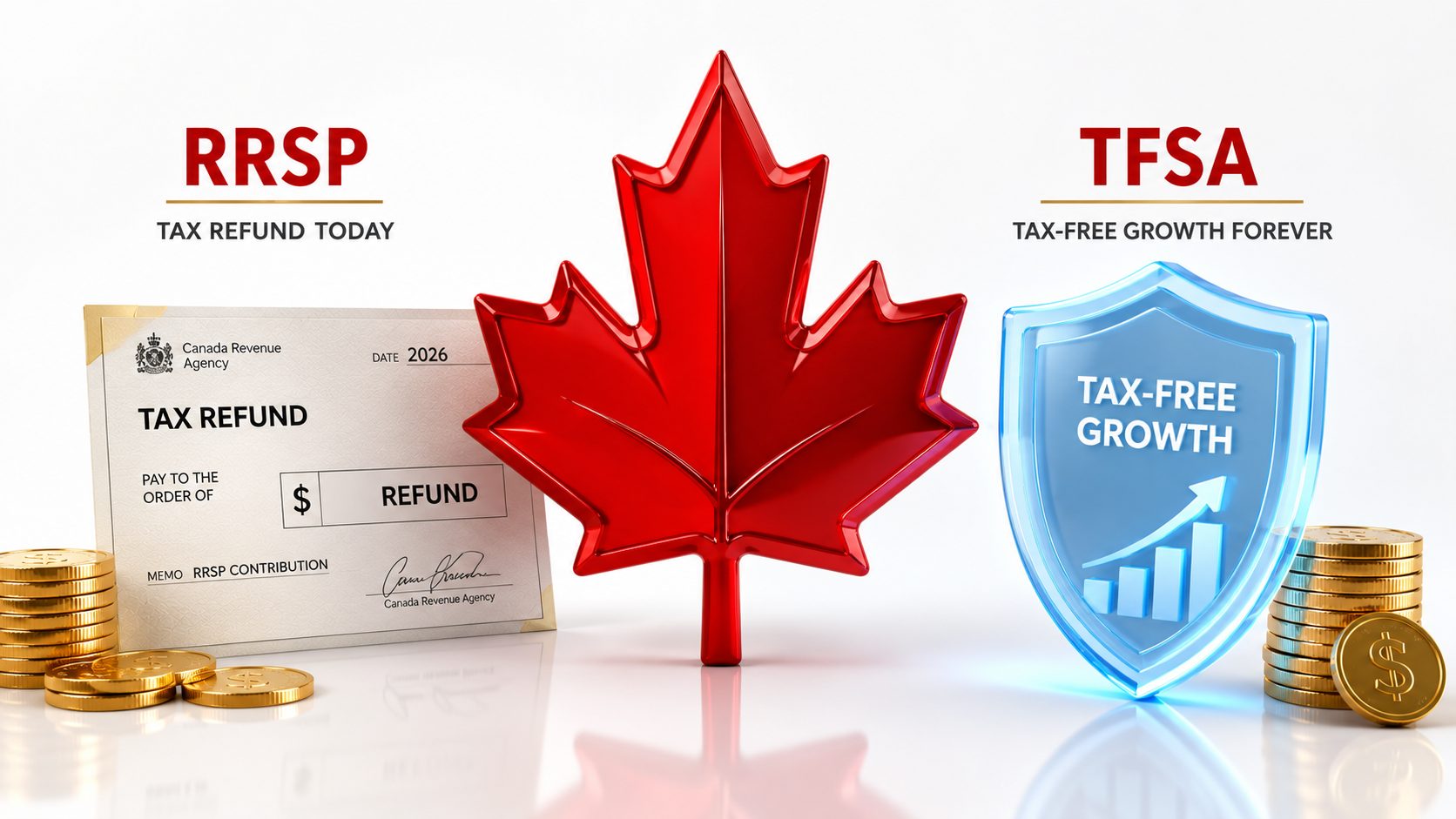
First-time buyers can increase their purchasing power by combining the new GST rebate with the federal Home Buyers' Plan. Under the updated HBP rules, individuals can withdraw up to $60,000 (and couples up to $120,000) from their Registered Retirement Savings Plan (RRSP) tax-free. By avoiding immediate withholding taxes on these withdrawals, buyers can save thousands of additional dollars for their down payment.
The federal rebate is generous, then brutal. At $1,000,000 you keep the full $50,000. Every $10,000 of price above that erases $1,000 of rebate, and at $1,500,000 the federal help is exactly zero. A buyer choosing between a $1,480,000 and a $1,520,000 home is really choosing between a $2,000 rebate and nothing, which is worth a hard second look at the upgrade options list.
Ontario's ENHR is flatter: $80,000 holds all the way to $1,500,000 before its own slide begins. That asymmetry means mid-range luxury buyers lean almost entirely on the provincial rebate, and the combined curve below is worth studying before you negotiate price. If the builder's quote hovers just above a threshold, negotiating $15,000 off the price can be worth far more than $15,000 once the rebate math is applied.
You can claim the rebates two ways: pay the full HST at closing and apply to the CRA afterwards with Form GST190, or assign the rebate to the builder so it comes off your closing statement immediately. On Aisha's $110,000, assignment is the difference between financing an extra six figures for months and never touching it.
The catch sits in the builder's standard contract: if the CRA later denies your eligibility, you owe the builder the assigned amount in cash. That makes honest eligibility checking before signing, not after, the entire game.
Both rebates assume the home becomes your primary residence and stays that way for at least a year. Sell or rent it out within 12 months and the CRA claws the rebate back in full, unless you can document an unforeseen life event like a job relocation or a death in the family.
First-time buyers can amplify their purchasing power by pairing the rebates with the Home Buyers' Plan: up to $60,000 per person ($120,000 for a couple) withdrawn from RRSPs tax-free, repayable over 15 years. On Aisha's numbers, the rebate assignment plus a full HBP withdrawal cuts the cash she needs at closing by roughly $170,000 compared with a buyer using neither, which is frequently the difference between buying this year and saving for three more.
Investors are not shut out entirely: renting the property from day one disqualifies the buyer rebates but opens the separate New Residential Rental Property Rebate. What kills claims is pretending, closing as a 'primary residence' while listing the unit for rent. The CRA cross-checks addresses on tax returns, licences, and utility accounts, so keep proof of actually living there.
Co-signers create the subtler version of the same trap: if a parent goes on title to strengthen the mortgage application and that parent is not a first-time buyer, the federal rebate gets prorated or denied even though the child qualifies perfectly. Where possible, keep non-qualifying helpers as guarantors rather than owners on title.
Two rebates stack on a new-build purchase in Ontario. The federal Bill C-4 rebate refunds 100% of the 5% GST on homes up to $1,000,000 (worth up to $50,000), then phases out linearly to zero at $1,500,000. Ontario's Enhanced New Housing Rebate (ENHR) refunds the 8% provincial portion up to $80,000 for contracts signed 1 April 2026 to 31 March 2027.
The calculator applies both sets of thresholds to your purchase price, adds your Home Buyers' Plan tax advantage, and shows the total knocked off your closing costs.
Aisha, a first-time buyer, signs for a $1,200,000 new townhouse in Ontario in June 2026.
Federal rebate in the phase-out band: 10% x ($1,500,000 - $1,200,000) = $30,000.
Ontario ENHR at that price: the flat maximum, $80,000. Stacked: $110,000 off a $156,000 HST bill, so she pays $46,000 of tax instead.
She assigns both rebates to the builder on the purchase agreement, so the $110,000 never has to leave her bank account at closing, and she pairs it with a $60,000 HBP withdrawal for the down payment.
Review the glossary of terms used in the calculation model below. Click on highlighted links to read more in-depth definitions in our financial glossary:
| Parameter | Definition & Context |
|---|---|
| Purchase Price | The contract price of the new build before tax. Both rebates' thresholds and phase-outs run on this number. |
| HBP Withdrawal | RRSP money withdrawn under the Home Buyers' Plan, up to $60,000 per person, tax-free if repaid on the 15-year schedule. |
| Marginal Tax Rate | Your top tax bracket, used to value the withholding tax you avoid by using the HBP instead of a taxable RRSP withdrawal. |
The rules and figures on this page are researched from official primary sources: