£60,000 of pay leaves about £45,357 after income tax and NI
Oliver earns £60,000 in England in the 2026/27 tax year and has the standard £12,570 Personal Allowance. On that simple PAYE example, income tax is £11,432 and employee Class 1 National Insurance is £3,210.60. Before pension contributions, student loan deductions or other adjustments, £45,357.40 remains. His total deductions here are 24.4% of gross pay; the 40% higher-rate band applies only to part of his income.
These figures use annualized thresholds for a standard employee. PAYE calculations can vary by pay period and tax code, and Scotland sets separate income-tax bands for non-savings income.
Follow the two tax lines on Oliver's payslip
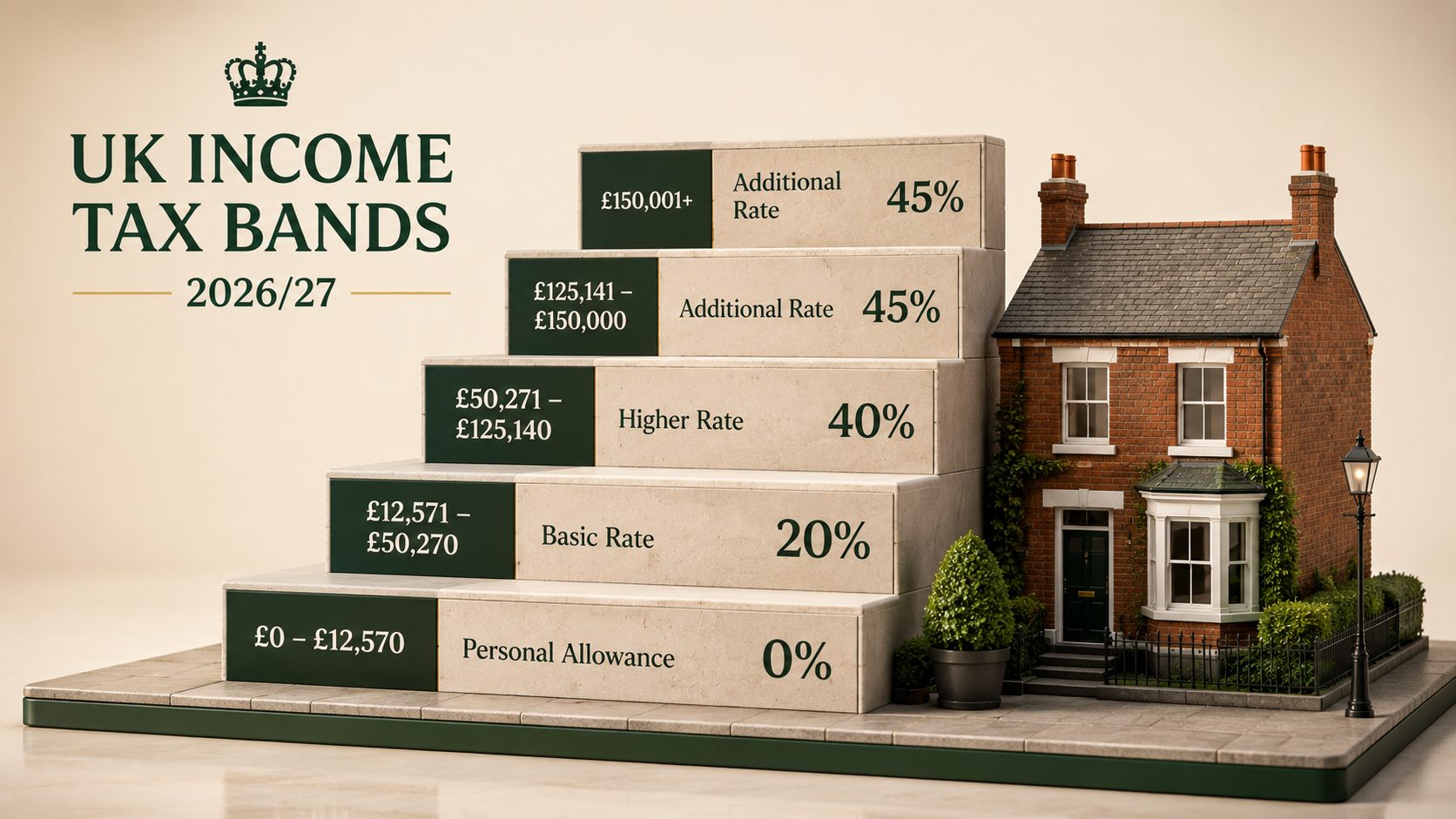
For England, Wales and Northern Ireland, the basic rate is 20% on the first £37,700 of taxable income above the allowance. The higher rate is 40% on the next slice up to the additional-rate boundary; the additional rate is 45% above £125,140. Oliver's first £37,700 after his allowance incurs £7,540. His other £9,730 is taxed at 40%, adding £3,892.
Employee NI is separate. On a standard category-A annualized calculation it is 8% from £12,570 to £50,270 and 2% above £50,270. For Oliver that is £3,016 + £194.60 = £3,210.60. An employer's NI bill is a different charge and is not deducted from this £60,000 salary example.
| Oliver's £60,000 annual pay | Amount |
|---|---|
| Income tax | £11,432.00 |
| Employee NI | £3,210.60 |
| Combined direct deductions | £14,642.60 |
| Pay after those deductions | £45,357.40 |
Oliver’s £60,000 salary: income tax and NI
The £100,000 to £125,140 allowance taper
Adjusted net income above £100,000 removes £1 of Personal Allowance for each £2 of excess income. At £115,000, the allowance is £5,070. The loss of allowance adds another 20 pence of income tax for each extra £1 in this interval, on top of the 40 pence higher rate. That is a 60% marginal income-tax effect, plus 2% employee NI in this pay range.
| Gross pay, no other adjustments | Personal Allowance | Income tax | Employee NI |
|---|---|---|---|
| £100,000 | £12,570 | £27,432.00 | £4,010.60 |
| £115,000 | £5,070 | £36,432.00 | £4,310.60 |
| £125,140 | £0 | £42,516.00 | £4,513.40 |
Income tax as the Personal Allowance tapers
The extra £15,000 from £100,000 to £115,000 raises income tax by £9,000 and NI by £300. This page previously showed the £115,000 and £160,000 tax/NI rows with mismatched totals; those numbers should not be used. A pension contribution can reduce adjusted net income, but the relief depends on how the contribution is made and other allowances. Check your payslip and pension scheme before treating £100,000 as a personal target.
Suppose an employer accepts a £15,000 qualifying salary sacrifice into a workplace pension for the £115,000 employee, with no other income or payroll effects. Cash pay falls to £100,000 and the Personal Allowance returns to £12,570. Income tax in this simple annual calculation falls from £36,432 to £27,432; employee NI falls from £4,310.60 to £4,010.60. The £15,000 pension addition therefore reduces annual cash pay after these two taxes by £5,700. This is a worked illustration of the taper, not a universal pension recommendation. Employer plan rules, the pension annual allowance, benefits based on salary, and how the sacrifice is arranged all need checking.
A personal pension contribution outside salary sacrifice can also affect adjusted net income, but its NI effect is different. Do not copy the £300 NI saving from a salary-sacrifice illustration onto a relief-at-source payment. HMRC may collect some relief through tax codes or a return. This is why the payment route belongs beside the gross pension amount in any comparison.
Check the tax code and where you live
A tax code reflects the allowance HMRC has instructed the employer to use; it can change because of benefits, earlier underpayments or another job. If the code is wrong, a correct band table still gives the wrong take-home estimate. HMRC's 2026/27 employer thresholds set out the current PAYE and NI figures.
Scottish taxpayers have different income-tax bands for wages and pensions. Savings interest and dividends are taxed under UK-wide rules. If you live in Scotland, use the Scottish rate table for the income-tax part and then add employee NI separately. This article's worked figures are for England, Wales and Northern Ireland.
NI is calculated through payroll periods, so multiplying a weekly or monthly deduction by 52 or 12 may differ from the annualized examples above. A bonus in one pay period, a second job, a change of NI category, or an irregular payment can alter the line on a payslip. For income tax, the full-year liability still depends on total taxable income and the tax code and payments used during the year. Compare a full-year estimate with your P60 and account statement before concluding an employer has withheld the wrong amount.
The £125,140 line is easy to misread. Above it, the Personal Allowance has already been reduced to zero, and the next ordinary wage pound faces 45% income tax in England, Wales and Northern Ireland. The 60% taper effect applies below that point while the allowance is being removed. A graphic that shows 45% beginning at £150,000 or tells a £130,000 employee they are still in the taper would send the reader to the wrong part of the calculation. Always use the tax year's published boundaries.