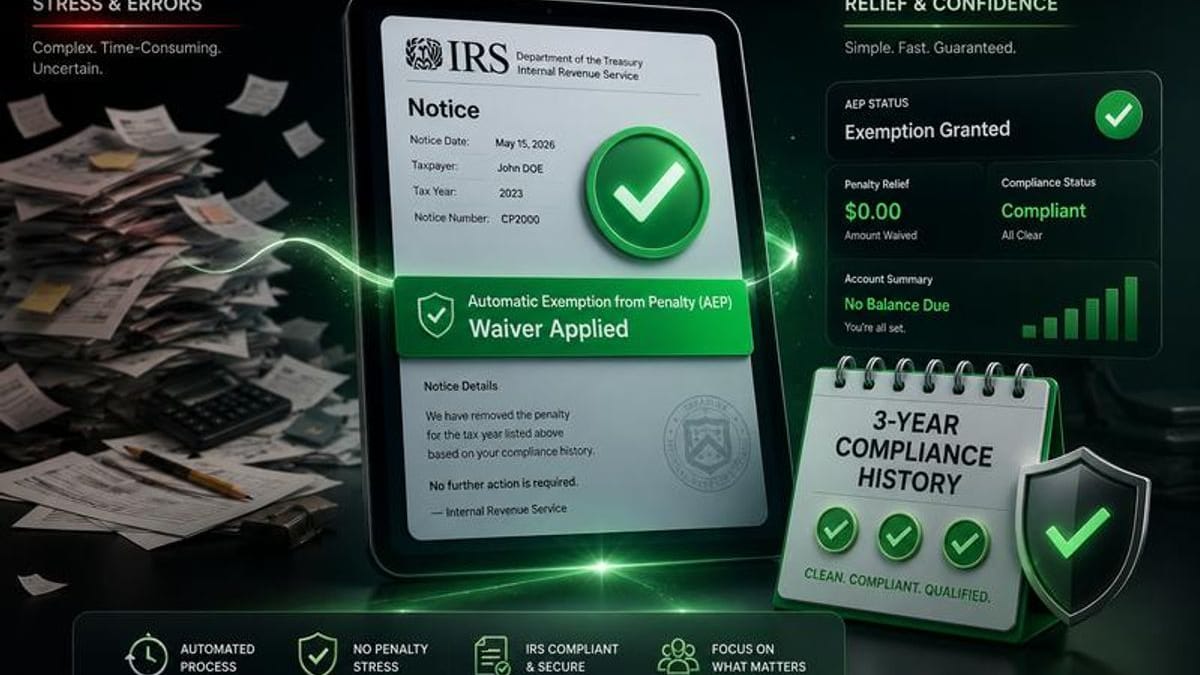
An abatement means the IRS wipes a charge from your record. Not a payment plan, not a settlement. The penalty simply disappears as if it never existed.
This is different from a refund: a refund returns money you already paid. An abatement removes a charge you haven't paid yet (or resets the balance to trigger a refund of what you did pay). Both use Form 843, but the outcome feels different, with abatement, you never write the check.
The three paths to getting one
1. First-Time Abatement (FTA) — the easiest win
If you filed and paid on time for the previous 3 tax years, the IRS will remove one penalty automatically. No "good reason" needed. Just a clean history. You can request this by phone (800-829-1040) or Form 843. Most taxpayers don't know this exists.
2. Reasonable Cause — you have a real story
The IRS defines reasonable cause as circumstances beyond your control: hospitalization, fire, flood, death of immediate family, incorrect written advice from the IRS itself, or postal service failures. You need documentation. A generic "I forgot" does not qualify.
3. Statutory/IRS Error — they got it wrong
If the IRS miscalculated a penalty (wrong amount, wrong period, applied to wrong year), abatement corrects their mistake. Happens more often than you'd expect with manual processing.
Real savings example
Dana filed her 2024 return 5 months late on a $8,000 tax balance. The failure-to-file penalty is 5% per month: $8,000 × 25% = $2,000. She calls the IRS, confirms she has a clean 3-year record, and requests First-Time Abatement. The $2,000 penalty is abated in 10 minutes on the phone. That is money she never has to pay.